Professional Wallpaper Hanging in Richmond, VA
When it comes to wallpaper hanging in Richmond, VA, our team has you covered.
Murray Painting brings detailed prep work and trusted craftsmanship to wallpaper hanging throughout Richmond VA and Central Virginia, giving homeowners a durable, beautifully finished wallcovering that stands up to our historic homes and humid climate.
What Professional Wallpaper Hanging Involves and Why It Matters
Hanging wallpaper is not an extension of painting. It is its own trade. A painter rolls a wall in broad, even strokes. A wallcovering installer measures twice, dry-fits a panel, checks the pattern against the ceiling line, and only then reaches for adhesive. Seams have to land flush. Patterns have to match rail to rail, not close enough, exact. Miss by a quarter inch on a bold stripe or a large floral repeat and the mistake is visible from across the room.
Richmond VA adds another layer to this. Homes in the Fan, Church Hill, and the Museum District were largely built in the late 1800s and early 1900s, and most still have their original plaster walls instead of drywall. Plaster behaves differently. It can be softer in spots, hairline-cracked, or slightly uneven after a century of settling. A newer home in Midlothian, Glen Allen, Henrico, or Chesterfield with smooth drywall calls for a different prep approach entirely. Hanging wallpaper well means reading the wall in front of us, not applying the same steps everywhere.
Virginia requires painting and wallcovering contractors to hold a Class A license through DPOR, the Department of Professional and Occupational Regulation. Before hiring anyone for a whole home wallpaper project, it is worth confirming that license is current. We hold ours, and we treat wallpaper as a design decision that affects a room for many years, not a shortcut cosmetic fix. DIY attempts and unlicensed work are where we most often see bubbling, curling seams, and adhesive failure show up within a year.
Why Fall and Winter Are the Best Time to Schedule Wallpaper Hanging in Central Virginia
Richmond sits in a humid subtropical zone. Summers run hot and thick with moisture, and that moisture works its way into walls, into adhesive, into the air a fresh installation needs to cure in. Wallpaper hung in July has to fight humidity from day one. Adhesive can stay soft longer than it should, and that is exactly the condition that leads to bubbling or seams that lift months later.
Fall and winter give us drier air and steadier indoor conditions. Adhesive cures the way it is supposed to. Our crews can also control jobsite humidity more precisely during detailed prep work, which matters most on older plaster walls that need patching and priming before a single panel goes up. Cooler months simply give the material a fair chance to bond right the first time.
Spring books up fast across Central Virginia. Homeowners in Richmond, Midlothian, Glen Allen, Henrico, and Chesterfield who want a wallpaper project done before warmer weather returns should get on the schedule now, while our winter calendar still has room.
Evaluating and Preparing Your Walls
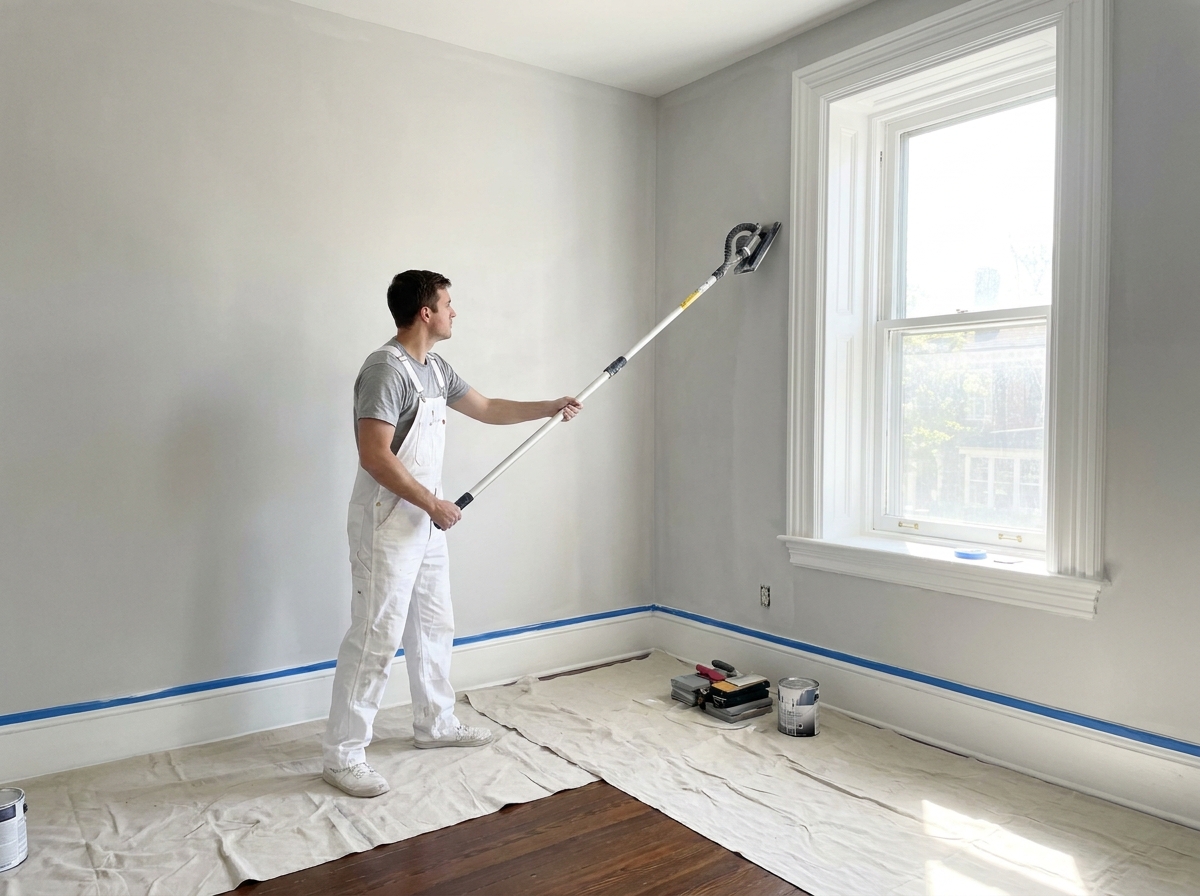
Every wallpaper project starts with a walk-through, not a sales pitch. We look at the wall itself. In a Church Hill row house, that might mean pressing along plaster for soft spots, checking corners for hairline cracks, and running a straightedge across the surface to find waves that a century of settling has left behind. In a newer Chesterfield build, the drywall is usually flatter and more predictable, but we still check seams, texture, and old paint layers for anything that could telegraph through new wallcovering.
Getting the wall ready
- Strip old wallpaper or peeling paint down to a stable surface
- Patch cracks and soft spots in plaster with the appropriate compound
- Sand patched areas smooth and flat
- Prime with a product suited to plaster or drywall, sealing the surface so adhesive bonds evenly
- Confirm the wall is fully dry before any wallcovering goes up
Since wallpaper is an interior finish, it is not reviewed by Richmond’s Commission of Architectural Review the way exterior paint colors are in the city’s historic districts. A homeowner in Church Hill can choose a bold pattern or a quiet neutral without seeking outside approval. That flexibility is one reason wallpaper has become a popular way to make a real design statement indoors, even on a home where the exterior palette is tightly controlled.
We are also seeing more requests for low-VOC adhesives and wallcovering materials, especially from younger homeowners in Richmond’s urban neighborhoods. We can source and install those products as part of the same detailed prep process.
Hanging, Finishing, and Final Inspection
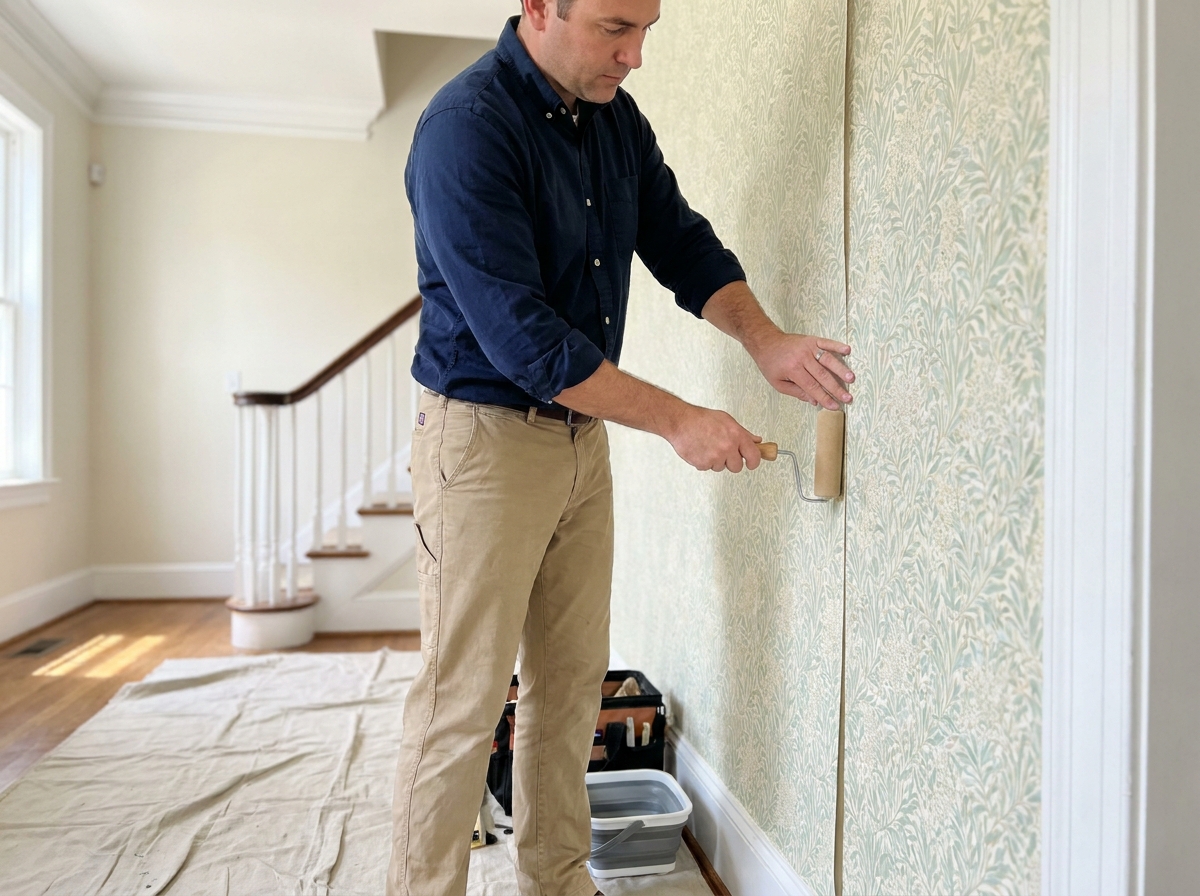
Once the wall is sealed and dry, hanging begins. We work panel by panel, matching each pattern to the one before it and checking plumb against a chalk line rather than trusting a corner that may not be square, common in older homes. Seams get rolled firm enough to set the bond but not so hard that adhesive squeezes out and discolors the paper. Air pockets get worked out toward the edge before the adhesive sets, which matters more in Richmond than in a drier climate, since trapped moisture under a bubble has nowhere good to go once summer humidity arrives.
Furniture gets moved and covered before we start, and floors are protected the same way. Scraps and old material are cleared out at the end of each day, so a project that spans several rooms never leaves the house looking like a job site overnight.
Before we call a project finished, we walk every wall with the homeowner. We check seams for full adhesion, look for any lifting edges, and confirm the pattern lines up cleanly at corners and ceiling trim. That final inspection is the same standard our crews hold to on full interior painting work across Central Virginia, and it is why homeowners keep calling us back for the next room, or the next house.
Caring for Your New Wallpaper After Installation
The work is not over once the crew leaves. Richmond summers bring heat and humidity back every year, and that combination is still the biggest long-term threat to adhesive. Running exhaust fans in bathrooms, keeping HVAC systems maintained, and avoiding prolonged high humidity in a papered room will do more to protect the installation than almost anything else.
Clean wallpaper gently. A soft, dry cloth or a barely damp sponge handles most dust and light marks, but the right method depends on the material. Vinyl-coated papers tolerate a bit more moisture than natural fiber or grasscloth wallcoverings, so we walk homeowners through care specific to what we installed. On projects using low-VOC adhesives, indoor air quality stays healthier in the weeks after hanging, which several Richmond clients have specifically asked for.
Homes with original plaster, particularly in the Fan or Museum District, can develop minor settling cracks over time. That is the nature of a hundred-year-old wall, not a failure of the wallpaper. If a seam ever lifts or a crack telegraphs through, we are available for touch-ups. We work throughout Richmond, Midlothian, Glen Allen, Henrico, and Chesterfield, and many of our wallpaper clients later bring us back for full interior painting elsewhere in the house.
Frequently Asked Questions
What causes wallpaper to bubble or peel after it's installed?
Bubbling and peeling almost always trace back to inadequate surface preparation or inconsistent adhesive application beneath the paper. Richmond’s humid subtropical climate compounds these issues, as moisture in the air can weaken bonds that weren’t properly sealed from the start. We address this by priming and sealing every wall before hanging, which creates a stable, moisture-resistant surface that keeps adhesive performing as intended for years.
Is wallpaper still an option on old plaster walls, or does it need to be drywall?
Plaster walls are common throughout homes in the Fan, Church Hill, and the Museum District, and they can absolutely be wallpapered successfully. The key is addressing the condition of the plaster first, patching cracks, sanding uneven areas, and applying the correct primer to stabilize any soft or aging spots. Once that groundwork is done, plaster actually provides a solid, long-lasting substrate for wallpaper installation.
How long does professional wallpaper hanging take for a typical room?
Most rooms take between two and four days from start to finish, depending on wall condition, room size, and how complex the pattern matching is. Intricate patterns require extra time for careful alignment at every seam, which affects the overall schedule. Older homes with original plaster often need additional prep days upfront to patch and stabilize walls before hanging can even begin.
Does humidity affect how well wallpaper holds up over time?
Yes, Richmond’s hot and humid summers put real stress on wallpaper adhesive if walls aren’t properly sealed beforehand. Moisture that penetrates an unsealed surface can soften the bond over time, leading to lifting seams or bubbling months down the road. We mitigate this risk by using quality primers and materials suited to our climate, and we recommend proper room ventilation to keep humidity levels in check long after installation.
What has to happen to a wall before new wallpaper can go up, especially over old wallpaper or paint?
Proper preparation starts with fully removing any existing wallcovering, since hanging new paper over old material leads to seams and imperfections showing through. From there, we patch holes or cracks, sand the surface smooth, and apply a primer formulated to help the new adhesive bond evenly. On original plaster walls, this process requires extra care, since the material can be fragile and prone to crumbling if rushed.
Can wallpaper be removed without damaging old plaster walls underneath?
Yes, with the right techniques, old wallpaper can be removed from plaster without harming the wall beneath it. We use controlled moisture application and gentle scoring methods suited to the age and condition of the plaster, common in many Central Virginia homes, to loosen adhesive without gouging the surface. In some cases, decades of built-up paper or adhesive residue means a skim coat or minor repair is needed afterward to restore a smooth, paperable surface.
Ready to get started?